
Accessorising for the Dance Floor: Jewellery That Moves and Shines With You
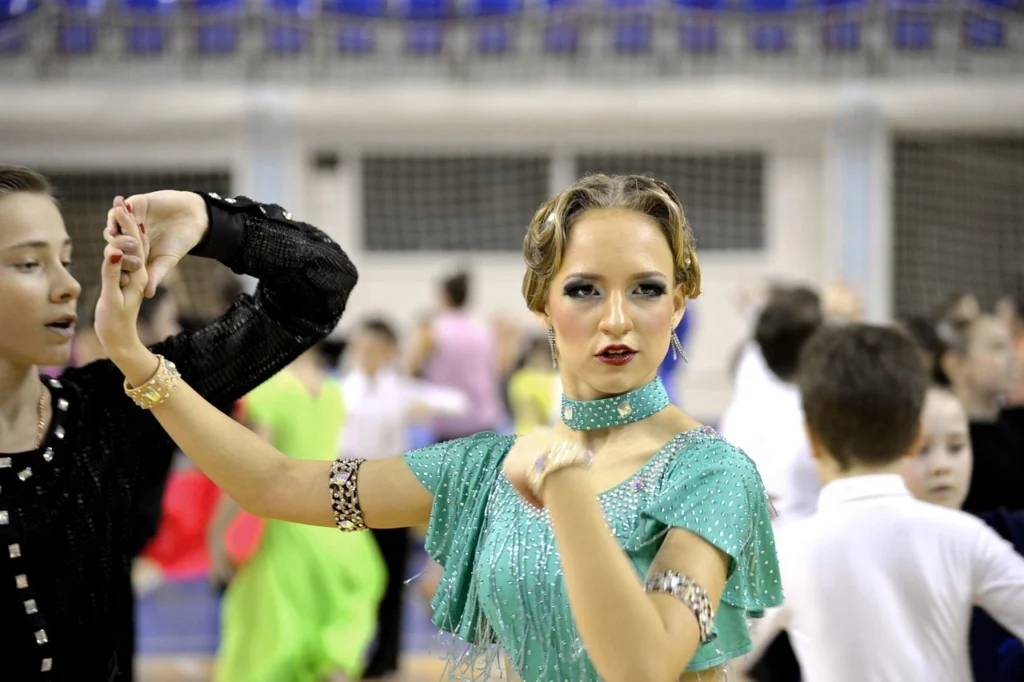
Anyone who’s spent real time on a dance floor, whether that’s weekly ballroom lessons, a competitive circuit, or simply a dedicated love of getting dressed up for a night of proper dancing, knows that jewellery behaves differently once you’re actually moving. What looks elegant standing still can catch on fabric mid-turn, swing awkwardly during a lift, or simply get in the way. Good dance-floor jewellery isn’t just decorative; it has to survive movement, lighting, and hours of wear without becoming a liability. Here’s how to think about it properly.
Why Movement Changes Everything
Static styling advice, the kind aimed at a dinner out or a day at the office, doesn’t really hold up once you’re spinning, dipping, or holding a frame for three minutes at a time. A long pendant that looks lovely at rest can swing into your partner’s face during a turn. Dangling earrings that catch the light beautifully in a photograph can also catch on a partner’s collar or your own hair mid-routine. Bangles that look elegant on a still wrist can clink distractingly, or worse, slip down your forearm at exactly the wrong moment during a lift.
None of this means dance-floor jewellery should be plain or an afterthought, quite the opposite. It just means the selection criteria are slightly different: secure fastenings, appropriate weight, and pieces that catch the light rather than the fabric.
Earrings: Small, Secure, and Built to Catch the Light
For dancing specifically, studs and small huggie-style earrings tend to outperform long drops, for the simple reason that they stay close to the ear and can’t swing, snag, or work loose during a fast routine. That doesn’t mean dull: a well-cut gold stud catches stage lighting or ballroom chandeliers beautifully, throwing light with every turn of the head, which is a genuinely underrated effect once you’ve seen it in person.
If you do want more presence for a competition or a formal dance event, look for earrings with a secure, close-fitting back rather than a loose hook, since hooks are precisely what tend to work free during energetic movement. A properly stocked earring collection is worth browsing with this specifically in mind, since the range of close-set, securely fastened styles available in solid gold tends to be much better suited to actual dancing than costume jewellery designed purely to be looked at rather than danced in.
Bracelets and Bangles: Choose Your Weight Carefully
This is the category where dancers most often get it wrong, reaching for a full stack of bangles because it looks glamorous in a still photo, then spending the whole evening managing jewellery that won’t stay put. A single, well-made bangle, snug rather than loose, or a bracelet with a secure clasp that sits close to the wrist, gives you the shine and the movement-catching quality without the practical headache.
Ballroom and Latin dancers in particular often favour a slightly heavier, well-fitted bangle specifically because it moves with the arm during frame work rather than sliding independently, creating a cleaner visual line through the arms during holds and extensions. A good bracelet and bangle range in solid gold, rather than lightweight costume pieces, tends to hold its shape and fit far better over a full evening of wear, which matters more than it sounds once you’ve danced three hours in something that kept sliding.
Necklaces: Shorter Than You’d Think
If you want a necklace on the dance floor, keep it short and close to the collarbone rather than a longer pendant that has room to swing. This is partly practical (nothing to catch on a partner during close hold) and partly about how it photographs and reads from a distance: a shorter piece sitting neatly at the throat reads as polished and intentional from across a ballroom, where a longer pendant can look like it’s simply bouncing around.
For competitive dancers especially, it’s worth testing any necklace through a full run of your routine before wearing it to an actual event. What feels secure standing in front of a mirror can behave very differently once you’re genuinely moving.
Costume Colour and Metal Tone
If you compete or perform regularly, it’s worth thinking about how your jewellery tone interacts with your costume choices across a season, rather than treating every outfit as a one-off styling decision. Warm gold tends to sit beautifully against the jewel tones and deep reds common in Latin costuming, picking up and echoing warm stage lighting in a way that silver-toned pieces sometimes can’t quite match under the same conditions. If your wardrobe leans toward a particular palette across the season, it’s worth building your jewellery choices around that consistency rather than buying a new piece for every single costume.
This is also a practical argument for investing in solid gold over a wardrobe of mixed costume pieces in different tones: a small, well-chosen gold collection works across far more of your costume changes than a drawer full of one-off pieces bought to match individual outfits, which tend to go unworn the moment that specific costume is retired.
Building a Dance-Ready Jewellery Edit
If you’re building out a small collection specifically for dance events, whether social dancing, formal balls, or competition, it’s worth thinking of it slightly differently from your everyday jewellery box. Prioritise solid metal over plated costume pieces (plating wears through fast under the friction of frequent wear and the sweat that comes with genuine physical exertion), and favour secure fastenings over anything that relies on a simple hook or clasp that could work loose mid-routine.
A well-curated women’s jewellery edit is a sensible place to start building this out gradually: one secure pair of studs, one well-fitted bangle, one short pendant or chain, chosen in solid gold so they’ll actually survive repeated wear across a full dance season rather than needing replacing after a few outings.
For Special Performances and Competitions
For a genuinely special occasion, a showcase, a medal test, a formal competition, it’s worth investing in a piece with real presence rather than sticking purely to the “minimal and secure” rule that governs regular social dancing. This is where a curated edit like Clogau’s top 100 pieces is genuinely useful, since it spans everything from simple, secure everyday pieces through to more decorative statement jewellery, giving you room to choose something with real impact under stage lighting without having to guess at what “impact” actually looks like across such a wide range.
Thinking About Skin, Sweat and Wear
Dance is physical in a way that most everyday jewellery was never really designed around, and that has a direct effect on what’s worth spending real money on versus what you can treat as disposable. Sustained contact with sweat accelerates tarnishing and discolouration in lower-quality plated pieces far faster than in ordinary wear, sometimes within a handful of sessions, which means costume jewellery bought specifically for one competition or one showcase rarely survives to be worn again looking as good as it did the first time. Solid gold, by contrast, simply doesn’t have this problem in the same way: it can be cleaned, polished, and worn again season after season without the surface itself degrading.
It’s also worth thinking about skin sensitivity, which tends to become more noticeable under the combined effect of heat, friction and sweat during a long evening of dancing. Nickel and other base metals used in cheaper costume pieces are a common cause of irritation in exactly these conditions, red, itchy skin under a bangle or earring by the end of the night, which solid gold largely avoids. If you’ve ever found yourself removing jewellery partway through an evening because your wrist or ears started to react, it’s very likely down to the metal itself rather than anything about your skin, and it’s usually the first sign that it’s time to invest in better-quality pieces for anything you intend to wear regularly on the floor.
A Few Practical Final Notes
Whatever you choose, test it before the event it’s intended for, not on the night itself. Put it on, move through a few turns, a lift if that’s part of your routine, and a full hold position, and see how it behaves. Anything that swings, catches, or shifts noticeably should either be adjusted (a bangle resized, a clasp tightened) or swapped for something more secure.
Good dance-floor jewellery is, in the end, a slightly different discipline from ordinary styling: less about how a piece looks in a single still moment, and much more about how it behaves across three minutes of continuous movement. Get that right, and the jewellery becomes part of the performance itself, catching the light with every turn, rather than something you’re quietly managing between steps.

